Free kit
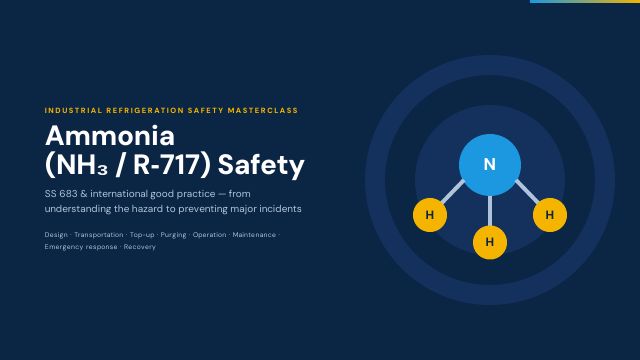
Ammonia (NH₃ / R-717) Safety Masterclass: SS 683 & International Good Practice Kit
A complete industrial refrigeration safety programme — from understanding the hazard to preventing major incidents.
This kit provides a structured, advanced industry-awareness masterclass for ammonia (NH₃ / R-717) refrigeration systems. It covers SS 683 and international good practice across the full lifecycle: design, transportation, top-up, purging, operation, maintenance, emergency response and recovery.
What is inside:
Introduction & awareness: ammonia as a great refrigerant with serious hazards — toxicity, high pressure, chemical burns, cold burns/frostbite, loss of containment, lower flammability, complex emergency response, environmental contamination
Understanding ammonia: properties, exposure limits (25 ppm long-term, 35 ppm short-term, 300 ppm NIOSH IDLH), how a release behaves (dry gas rises, cold moist cloud hugs the ground), and why smell is unreliable
SDS & human health: 16-section SDS, routes of exposure (inhalation, eye contact, skin contact, liquid contact, ingestion), effects on eyes and skin, and how ammonia affects the body
Advantages & limitations: high efficiency, excellent heat transfer, natural refrigerant, zero ODP/GWP, long industrial experience — versus safety challenges
SS 683: the core framework — Part 1 design/installation/commissioning, Part 2 operation/inspection/servicing/maintenance, Part 3 emergency response/recovery
SS 683 Part 1: laying the foundation — overpressure layers (normal control, high-pressure safety, shutdown/isolation, relief valve, safe relief discharge), relief valve verification, detection & alarm philosophy, ventilation as a safety barrier, installation, pressure testing & commissioning
What operators must understand: pre-start checks and routine monitoring
Transport, top-up, purging & maintenance: controlling the delivery interface, top-up hazards and critical controls, purging hazards (valve closed ≠ zero ammonia, gauge at zero ≠ empty, no smell ≠ safe), LOTO for all energy forms, priority equipment
Respiratory protection: air-purifying respirators (only if all conditions met) vs. SCBA for unknown/IDLH atmospheres; what a real emergency-response capability requires
Emergency scrubber / water tank: verification, and handling ammonia-contaminated water (contain, secure, sample, confirm regulatory route, treat or transfer)
SS 683 Part 3: emergency response & recovery — detect, alarm, notify, evacuate, account; who may enter an ammonia-affected area; emergency equipment and the questions to ask; recovery and restart
Roles and responsibilities: occupier, management, engineer, operator, maintenance, WSH, supplier/contractor, security, emergency team
Key supporting standards: ISO 817, ANSI/IIAR 2, 3, 4, 5, 6, 7, 9, EN 378, EN 13136, ASME B31.5, ASME BPVC VIII, NFPA 55, SS 548, SS 683 Parts 1–3, and the ASHRAE 15 clarification
Learning from real incidents: hydraulic shock, overpressure equipment rupture, industrial release, purging injury
From normal inspection to depth inspection: examine people, plant, process, procedures, engineering barriers, human factors, emergency preparedness, safety culture
15 questions every ammonia facility should answer
Depth-inspection questions throughout
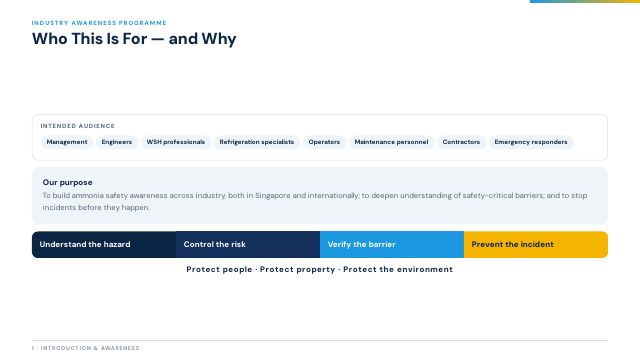
Who it is for
Industrial refrigeration engineers, ammonia plant operators, safety managers, facility operations leaders, process safety engineers, inspectors, and compliance professionals.
How to use it
Use this kit as a technical training programme, a depth-inspection checklist, a standards applicability guide, an emergency preparedness review tool, and a management verification framework. It helps organisations prevent major incidents before they happen and prove that critical ammonia safety barriers will perform when needed.
What is in the kit
- Ammonia NH3 R717 Safety721 KB
A look inside
The first pages of Ammonia NH3 R717 Safety. The full document downloads from the list above.
Questions people ask
Is the Ammonia (NH₃ / R-717) Safety Masterclass: SS 683 & International Good Practice Kit really free?
Yes. There is no payment and no trial. Tell us your name, work email and company once, and every document in the Free Zone is yours to download.
What format are the documents in?
This kit has 1 document in PDF format.
Can I use it inside my company?
Yes. The licence covers one organisation with unlimited internal use — print it, share it with colleagues and adapt it. Please do not resell it or republish it as your own.
Does this make us compliant with SS 683 / ISO 817 / EN 378 / EN 13136 / ANSI/IIAR / ASHRAE 15 / NFPA 55 / SS 548 / ASME B31.5 / ASME BPVC VIII / WSH Act?
No document can do that on its own. It is a practical working tool to help you prepare, check and improve. Conformity with SS 683 / ISO 817 / EN 378 / EN 13136 / ANSI/IIAR / ASHRAE 15 / NFPA 55 / SS 548 / ASME B31.5 / ASME BPVC VIII / WSH Act is decided by an audit of your actual system, and the standard itself remains the authoritative text.
Do you offer training on this topic?
Yes. Skedmia runs online courses with certificates on the standards and topics these kits cover — the matching courses are listed on this page.
More from the Free Zone
 FreeNew
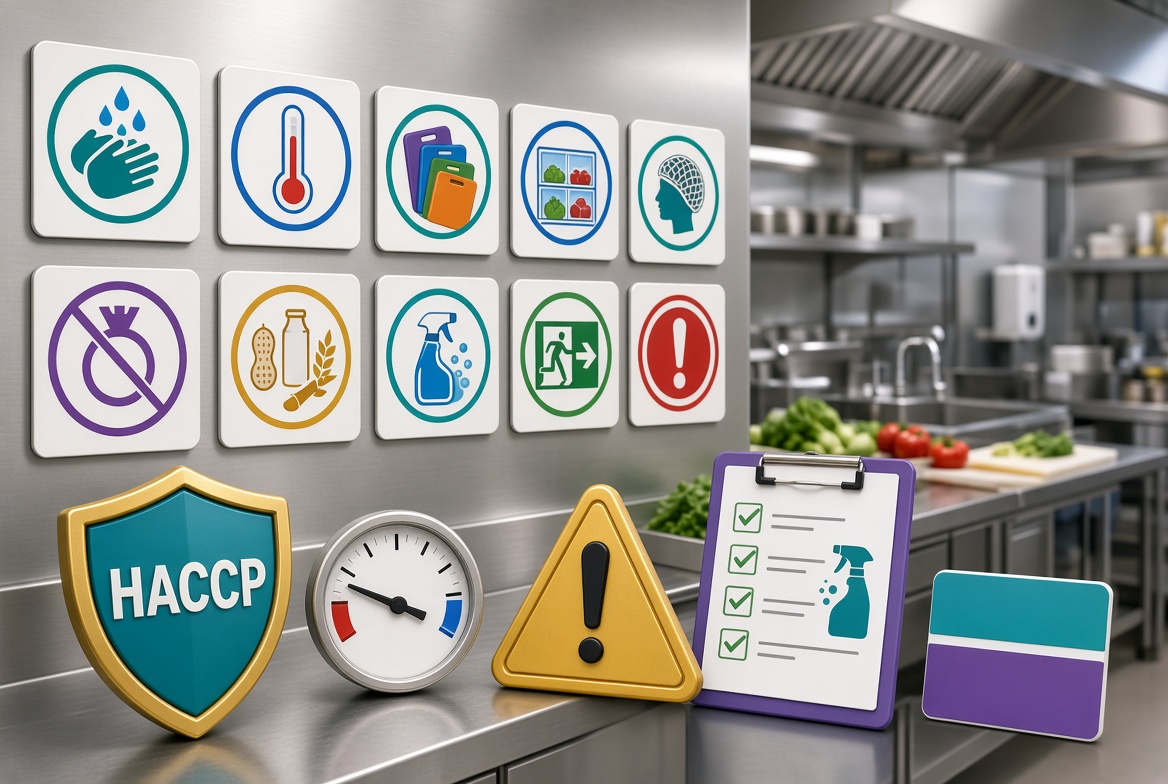
Food Safety Signs and Posters: Bilingual Hygiene, Temperature, Storage, Allergen & Safety Signage Kit
Hygiene, temperature, storage, allergens, hazards and workplace signs, in English and Arabic.
 FreeNew
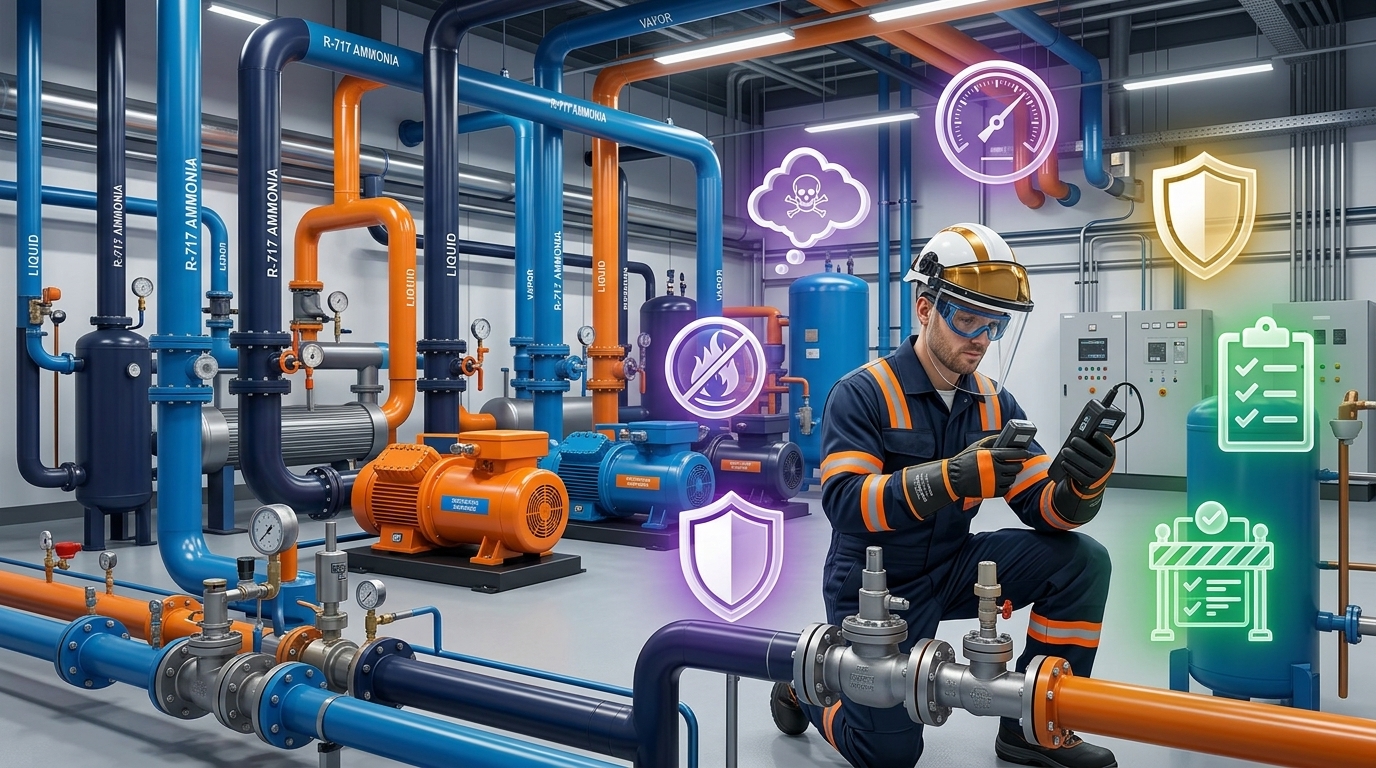
Ammonia R-717 Safety, Standards & Depth Inspection: Compliance & Barrier Verification Kit
A technical programme for industrial refrigeration engineers, safety managers and facility operations leaders — building the knowledge and practical skills to run ammonia refrigeration systems safely,
 FreeNew
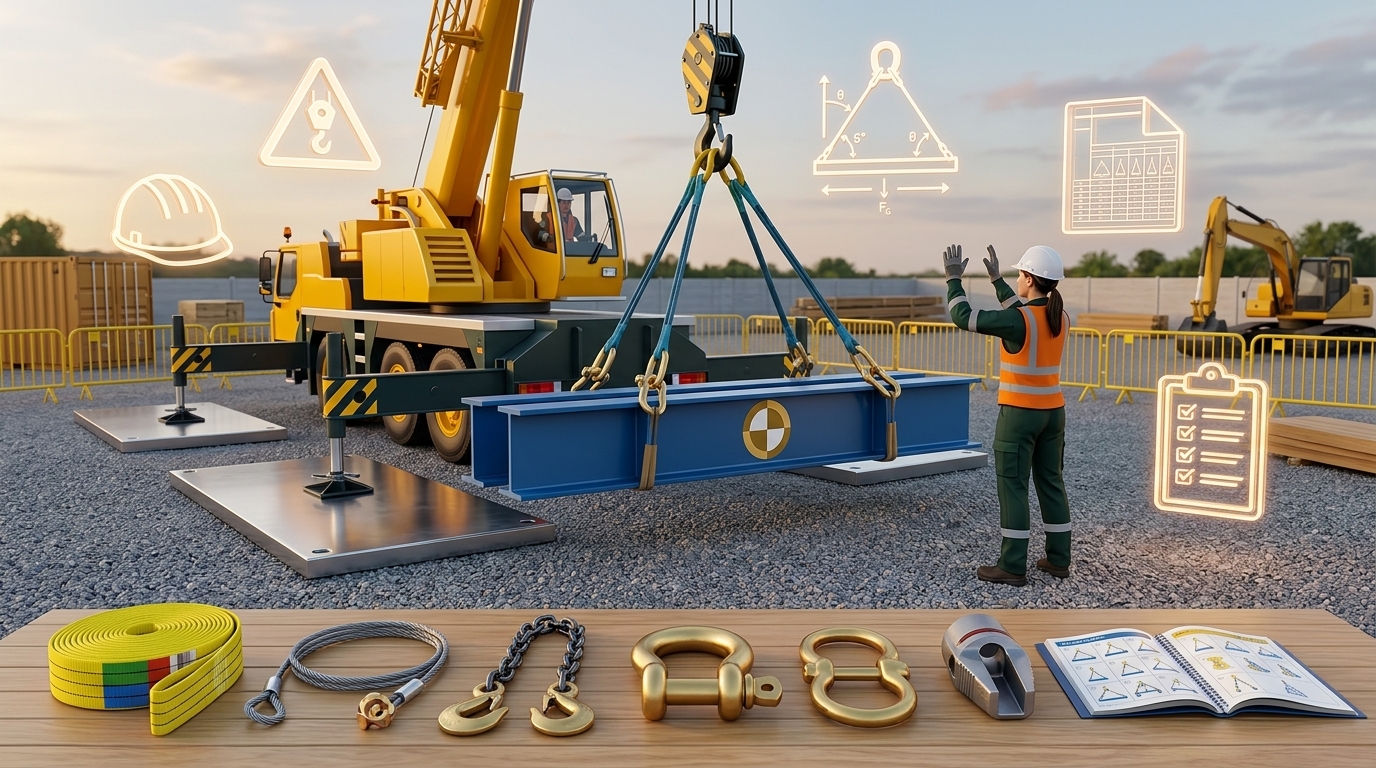
Lifting Operation & Rigging Safety: Planning, Stability & Sling Load Kit
Planning a lift, understanding crane stability, calculating sling loads, and rigging correctly — from the pre-lift meeting to the final hand signal.