
Free kit
Ammonia R-717 Safety, Standards & Depth Inspection: Compliance & Barrier Verification Kit
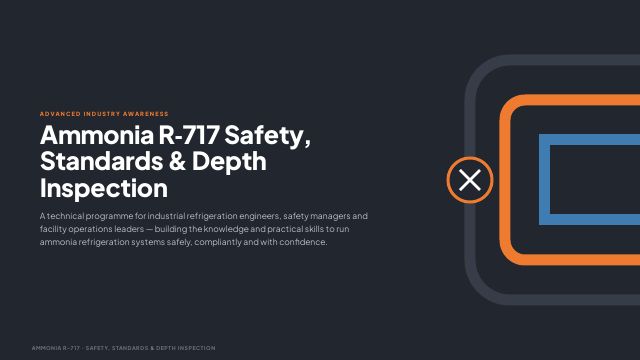
A technical programme for industrial refrigeration engineers, safety managers and facility operations leaders — building the knowledge and practical skills to run ammonia refrigeration systems safely,
This kit provides a structured, advanced industry-awareness programme for ammonia R-717 refrigeration systems. It moves beyond document checking to focus on whether critical safety barriers actually work — covering standards applicability, depth inspection, engineering verification, emergency preparedness, and legal compliance.
What is inside:
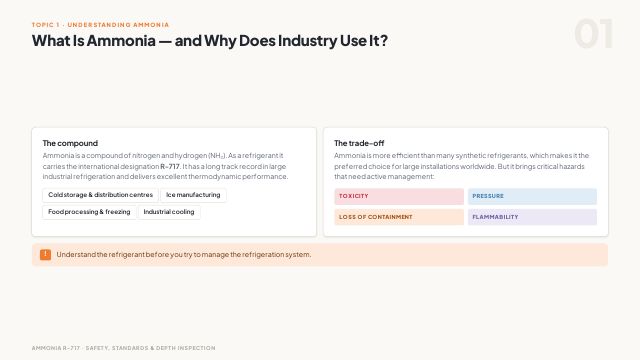
The compound: ammonia (NH₃) as R-717, its efficiency trade-off, and critical hazards — toxicity, pressure, loss of containment, flammability
An ammonia plant as a process system: compressor, condenser, receiver, valves and piping; how failure spreads
Programme purpose: understand requirements, determine applicability, implement and verify, maintain evidence
Five pillars: ammonia safety, SS 683, international standards, Singapore Standards, legal framework
Not every document carries the same weight: legislation, regulations, Singapore Standards, international standards & guidance
Establish applicability before judging compliance: is it legislation, regulation, referenced standard, or recognised good practice?
Lifecycle stages: design, installation, testing, commissioning; start-up, operation, monitoring, shutdown; inspection, servicing, LOTO, repair, verification, restart; detect, alarm, evacuate, respond, control, recover; incident learning, PHA, CAPA, verification, management review
SS 683 Part 1: design, installation, commissioning — pressure systems, machinery room, detection & alarms, testing & commissioning
SS 683 Part 2: keeping the system safe in operation — operator competency, SOPs, daily inspection rounds, preventive maintenance, LOTO, refrigerant handling records
SS 683 Part 3: emergency response and recovery — detect, raise alarm, communicate, evacuate, headcount; why facilities must be ready at any hour
R-717 and its safety classification: ISO 817, B2L — higher toxicity, lower flammability
EN 378: refrigeration-system safety — system design, construction & testing, operation & maintenance, refrigerant safety
EN 13136: engineering the pressure-relief system — relief valve sizing, discharge piping, safe discharge location
IIAR: ammonia-specific technical depth — design & installation, inspection & testing, operating procedures, PHA & incident review
NFPA 55: know its actual scope — ammonia supply cylinders, gas handling, bulk storage; not a replacement for dedicated ammonia refrigeration standards
ASHRAE 15-2024: current edition excludes ammonia R-717 from scope — do not apply it as a current compliance requirement
SS 586 Part 1: hazard communication for transport and storage — identification, warning communication, storage information, emergency information
SS 586 Part 2: GHS classification and chemical labelling — container labels, SDS, hazard statements, pictograms, worker understanding
SS 473 Part 2: eye protection against ammonia — safety spectacles, chemical-splash goggles, goggles + face shield
SS 513 Part 1: safety footwear — chemical resistance, cold insulation, slip resistance
SS 548: respiratory protective devices — maintenance, abnormal conditions, emergency; supplied-air protection for unknown concentrations
SS 638: electrical installations — process equipment, safety systems, lighting & access, LOTO & isolation
Glove selection beyond basic compliance: chemical resistance, breakthrough time, cold protection, dexterity, emergency response
WSH Act: overall workplace safety duty — duty holder obligations for employees, contractors, visitors, drivers
Risk assessment framework: eliminate, substitute, engineering controls, administrative controls, PPE
Report, investigate, improve: immediate response, legal notification, preserve evidence, root cause investigation, CAPA, verify effectiveness
Broader workplace health controls: machinery safety, toxic substances, ventilation & air quality, exposure control
One emergency plan, not two: ammonia emergency + building emergency = one coordinated response
Applicability matters: petroleum and flammable materials regulations, environmental protection, hazardous substance activities, toxic industrial waste
One plant, one integrated safety system: SS 683, international standards, Singapore Standards, WSH legislation, fire & environment law
What a normal inspection may miss: presence vs. performance
Six steps of barrier verification: identify, inspect, test, interview, review records, challenge
Management verification checklist: documentation & systems, active safety management
Physical inspection of critical components: pressure systems, detection & alarms, life safety, identification & access
Competency must be demonstrated: key interview questions for operators and maintenance staff
Test the whole response sequence: detection, alarm activation, emergency communication, evacuation, assembly & headcount
Depth-inspection questions throughout
Who it is for
Industrial refrigeration engineers, ammonia plant operators, safety managers, facility operations leaders, process safety engineers, inspectors, and compliance professionals.
How to use it
Use this kit as a technical training programme, a depth-inspection checklist, a standards applicability guide, an emergency preparedness review tool, and a management verification framework. It helps organisations prevent incidents before they happen and prove that critical ammonia safety barriers will perform when needed.
What is in the kit
- Ammonia R717 Safety Standards Depth Inspection1.4 MB
A look inside
The first pages of Ammonia R717 Safety Standards Depth Inspection. The full document downloads from the list above.
Questions people ask
Is the Ammonia R-717 Safety, Standards & Depth Inspection: Compliance & Barrier Verification Kit really free?
Yes. There is no payment and no trial. Tell us your name, work email and company once, and every document in the Free Zone is yours to download.
What format are the documents in?
This kit has 1 document in PDF format.
Can I use it inside my company?
Yes. The licence covers one organisation with unlimited internal use — print it, share it with colleagues and adapt it. Please do not resell it or republish it as your own.
Does this make us compliant with SS 683 / ISO 817 / EN 378 / EN 13136 / IIAR / NFPA 55 / ASHRAE 15 / SS 586 / SS 473 / SS 513 / SS 548 / SS 638 / WSH Act / Fire Safety Act / EPMA / Toxic Industrial Waste?
No document can do that on its own. It is a practical working tool to help you prepare, check and improve. Conformity with SS 683 / ISO 817 / EN 378 / EN 13136 / IIAR / NFPA 55 / ASHRAE 15 / SS 586 / SS 473 / SS 513 / SS 548 / SS 638 / WSH Act / Fire Safety Act / EPMA / Toxic Industrial Waste is decided by an audit of your actual system, and the standard itself remains the authoritative text.
Do you offer training on this topic?
Yes. Skedmia runs online courses with certificates on the standards and topics these kits cover — the matching courses are listed on this page.
More from the Free Zone
 FreeNew
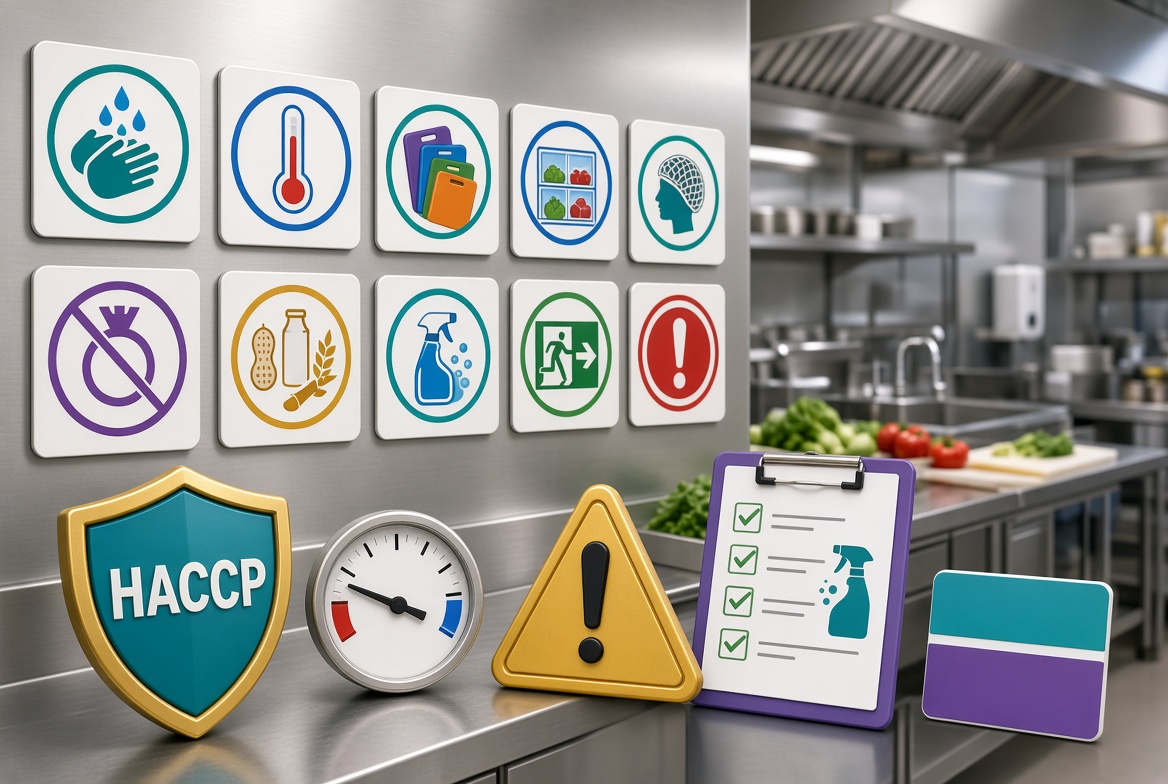
Food Safety Signs and Posters: Bilingual Hygiene, Temperature, Storage, Allergen & Safety Signage Kit
Hygiene, temperature, storage, allergens, hazards and workplace signs, in English and Arabic.
 FreeNew
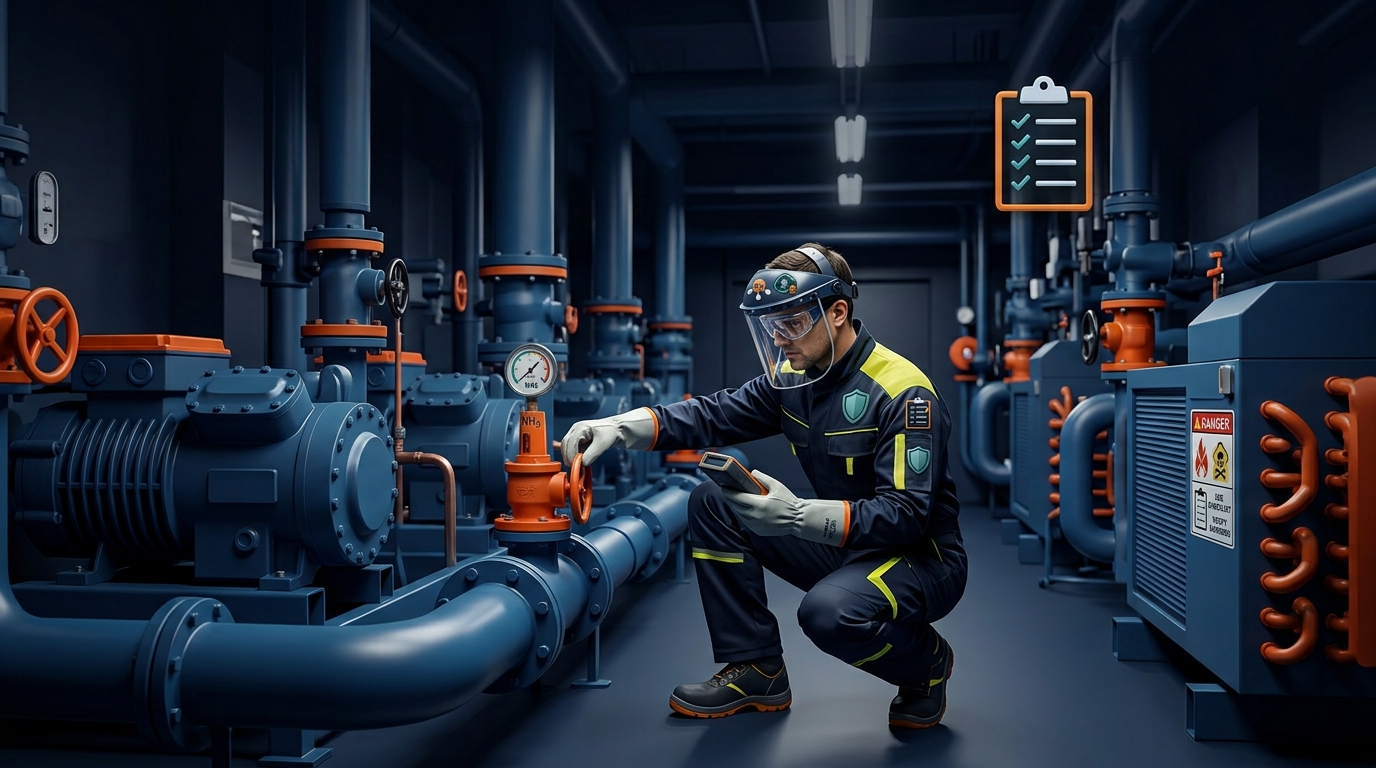
Ammonia (NH₃ / R-717) Safety Masterclass: SS 683 & International Good Practice Kit
A complete industrial refrigeration safety programme — from understanding the hazard to preventing major incidents.
 FreeNew
Lifting Operation & Rigging Safety: Planning, Stability & Sling Load Kit
Planning a lift, understanding crane stability, calculating sling loads, and rigging correctly — from the pre-lift meeting to the final hand signal.