
Free kit
Fire Sprinkler vs Water Mist Systems: Tunnel Fire Suppression Comparison Kit
A practical guide comparing sprinkler/deluge and water mist systems for road tunnel fire protection, from technology and design to maintenance and lifecycle cost.
This kit provides a structured, technical comparison of two major water-based fire-suppression technologies used in road tunnels: sprinkler/deluge systems and water mist systems. It explains how each works, how they control a vehicle fire, and what to consider when selecting the right solution for a given tunnel.
What is inside:
Executive overview: key differences in droplet size, water demand, pressure, discharge characteristics, and applications
Tunnel environment: visibility challenges at entrances and exits, lighting, ventilation, and smoke control
Fire risk in tunnels: why vehicle fires start, why they are more dangerous in confined spaces, and the fire development timeline
Sprinkler/deluge technology: open nozzles, deluge valves, zoned activation, hydraulic design, temperature ratings, pressure, flow, and K-factor
Water mist technology: fine droplets under 1,000 µm, pressure classifications (low, intermediate, high), operating sequence, and specialised nozzles
Comparison: droplet size, water demand, cooling performance, maintenance, filtration sensitivity, and application suitability
Supporting systems: detection, ventilation, power supply, emergency exits, and evacuation
Inspection and maintenance: normal vs in-depth inspection, predictive maintenance, hidden hazards, and maintenance dashboards
Lifecycle cost: total cost of ownership, cost control through prevention, and who the system protects
Engineering checklists and key takeaways for design, commissioning, and verification
Who it is for
Tunnel engineers, fire-safety consultants, system designers, safety managers, maintenance teams, and infrastructure owners.
How to use it
Use this kit as a technical briefing, a design-comparison reference, a training aid, and a checklist for inspection, maintenance, and lifecycle planning. It helps teams move beyond simple compliance toward reliable, integrated tunnel fire protection.
What is in the kit
- Fire Sprinkler vs Water Mist Systems2.7 MB
A look inside
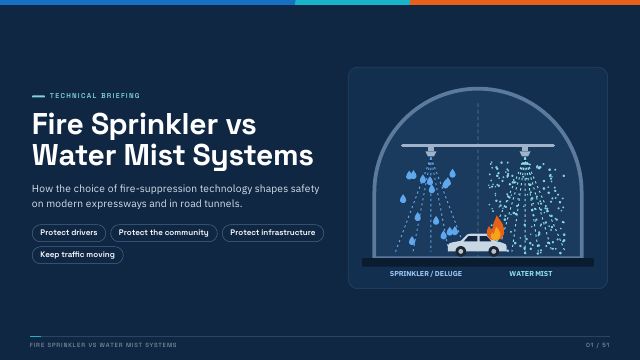
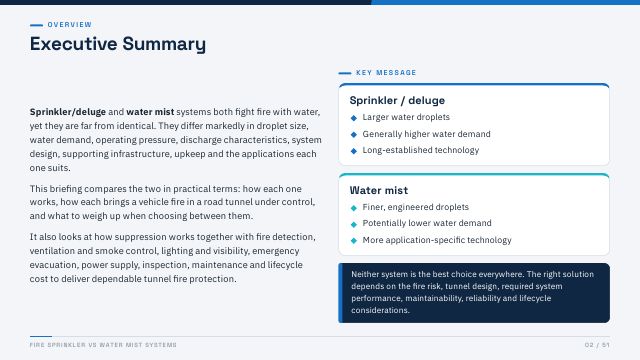
The first pages of Fire Sprinkler vs Water Mist Systems. The full document downloads from the list above.
Questions people ask
Is the Fire Sprinkler vs Water Mist Systems: Tunnel Fire Suppression Comparison Kit really free?
Yes. There is no payment and no trial. Tell us your name, work email and company once, and every document in the Free Zone is yours to download.
What format are the documents in?
This kit has 1 document in PDF format.
Can I use it inside my company?
Yes. The licence covers one organisation with unlimited internal use — print it, share it with colleagues and adapt it. Please do not resell it or republish it as your own.
Does this make us compliant with NFPA 502 / NFPA 750 / PIARC / Fire Safety Engineering?
No document can do that on its own. It is a practical working tool to help you prepare, check and improve. Conformity with NFPA 502 / NFPA 750 / PIARC / Fire Safety Engineering is decided by an audit of your actual system, and the standard itself remains the authoritative text.
Do you offer training on this topic?
Yes. Skedmia runs online courses with certificates on the standards and topics these kits cover — the matching courses are listed on this page.
More from the Free Zone
 FreeNew
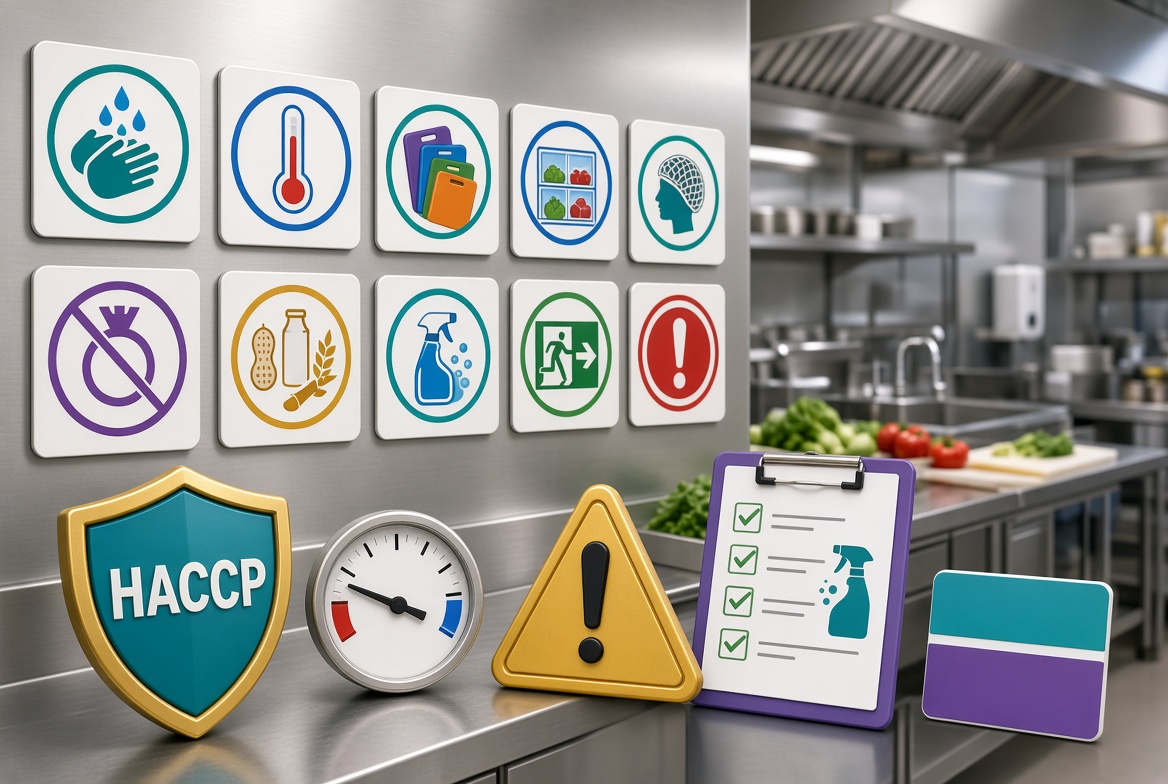
Food Safety Signs and Posters: Bilingual Hygiene, Temperature, Storage, Allergen & Safety Signage Kit
Hygiene, temperature, storage, allergens, hazards and workplace signs, in English and Arabic.
 FreeNew
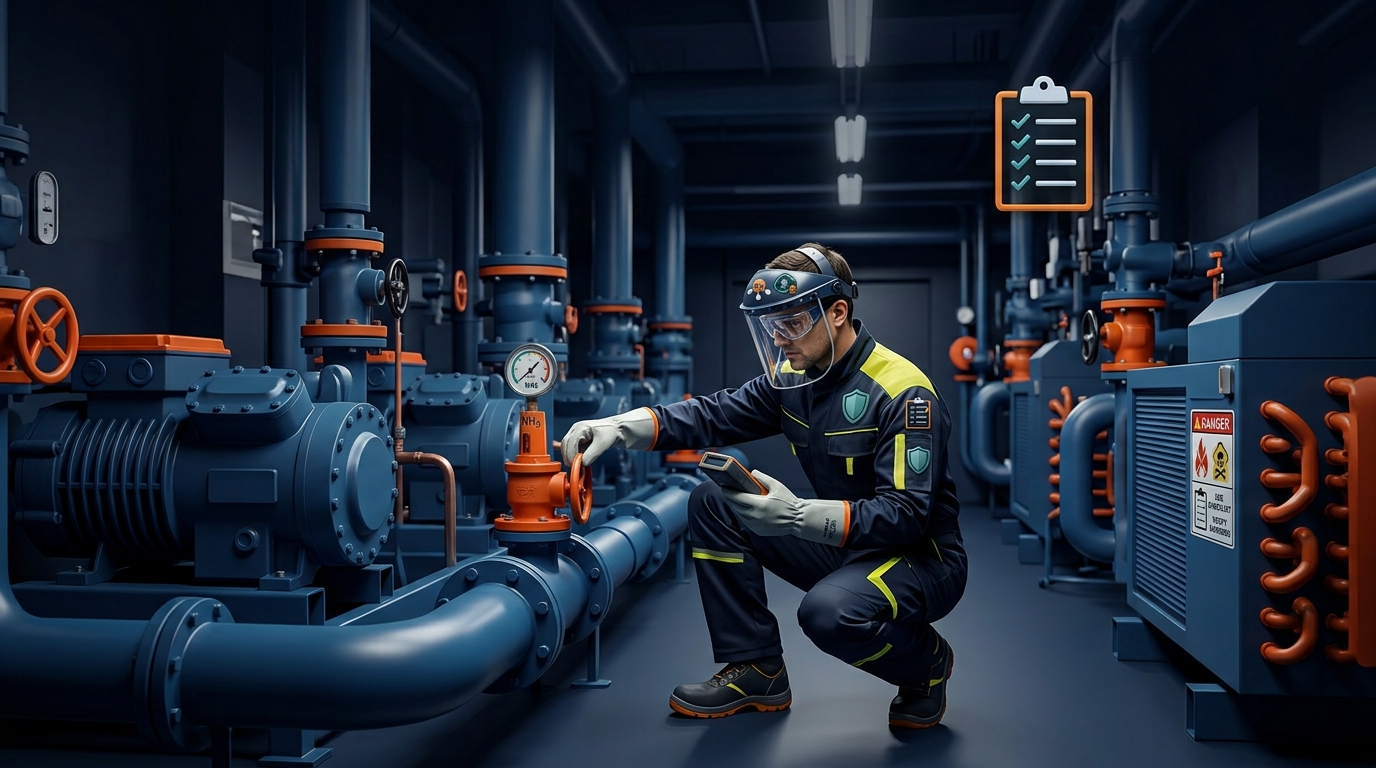
Ammonia (NH₃ / R-717) Safety Masterclass: SS 683 & International Good Practice Kit
A complete industrial refrigeration safety programme — from understanding the hazard to preventing major incidents.
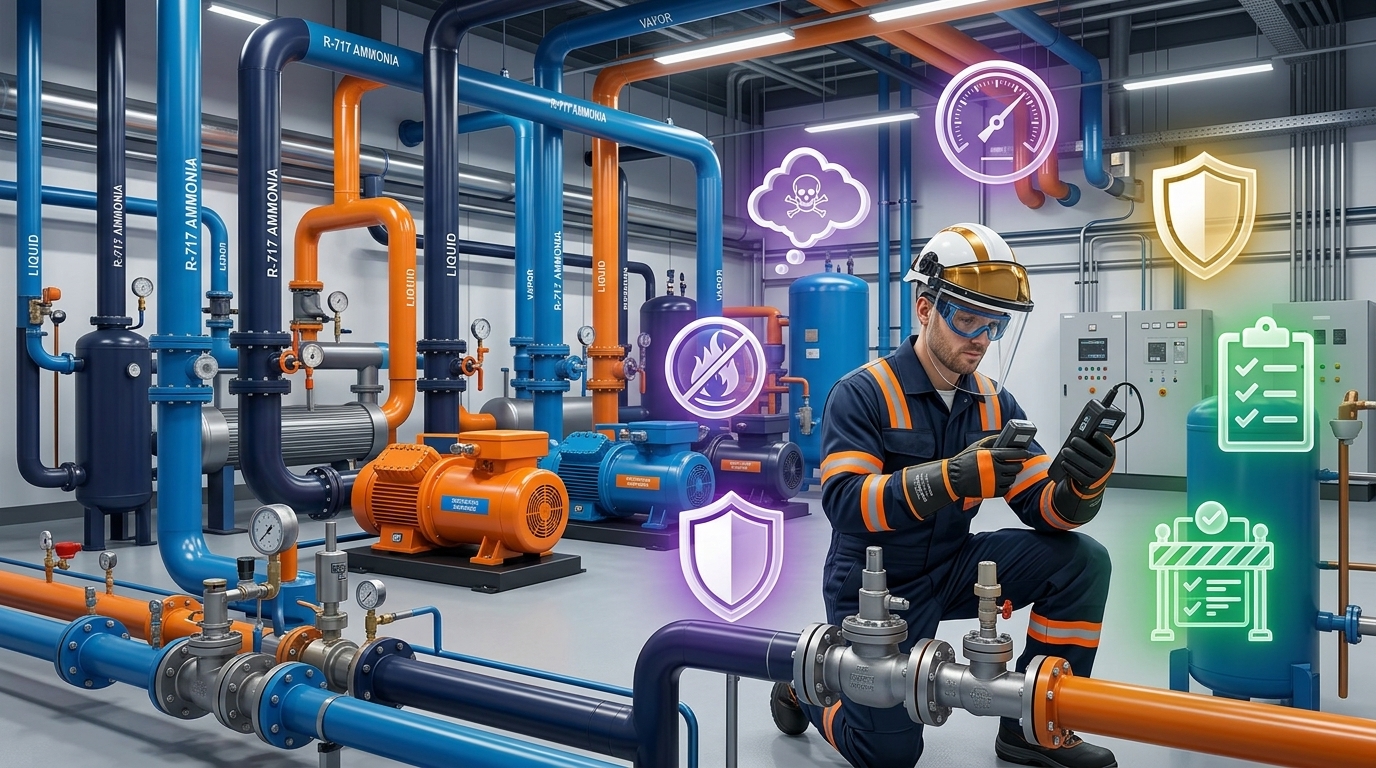 FreeNew
Ammonia R-717 Safety, Standards & Depth Inspection: Compliance & Barrier Verification Kit
A technical programme for industrial refrigeration engineers, safety managers and facility operations leaders — building the knowledge and practical skills to run ammonia refrigeration systems safely,