
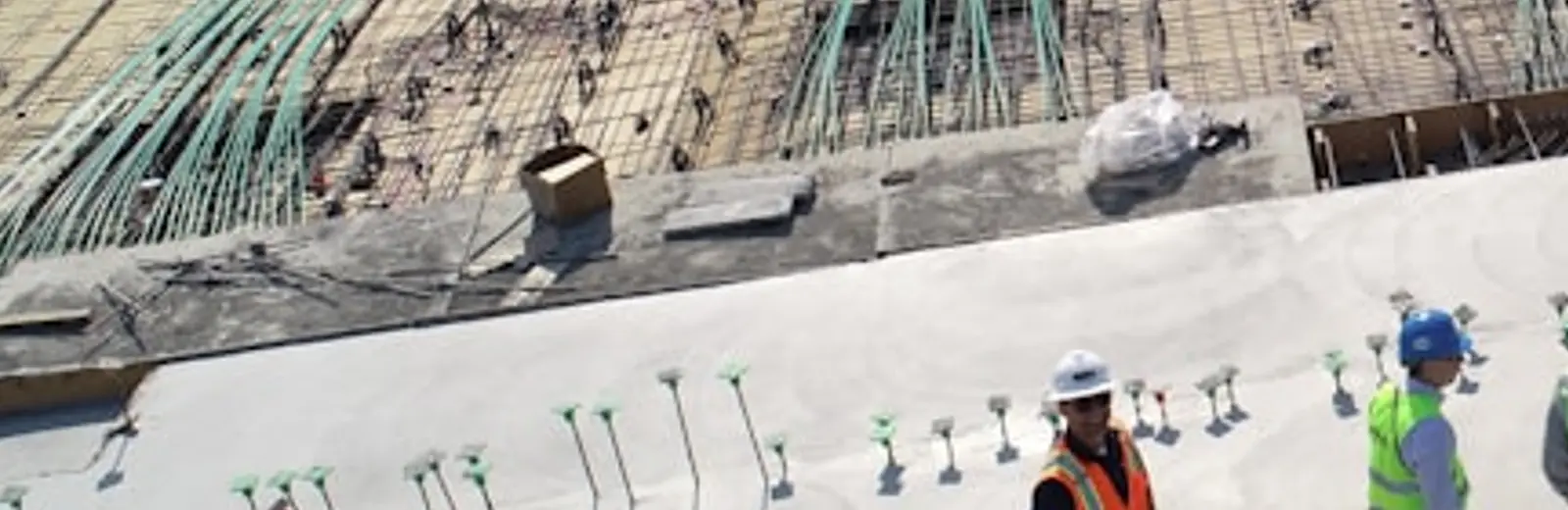
CEMP For Middle East Region, Specifically UAE, Qatar and Saudi Arabia
Plan, permit and run construction environmental controls to UAE, Qatari and Saudi requirements, from regional ESIA through to a working CEMP.
22
Lessons
~10h
Study time
30
Exam questions
Earns a QR-verifiable Certificate of Training
Overview
About this course
Construction in the Arabian Gulf is regulated by its own instruments, its own authorities and its own environmental realities. A construction environmental management plan written to a generic international template will not satisfy the Environment Agency – Abu Dhabi, Dubai Municipality, Qatar's Ministry of Environment and Climate Change or the Kingdom's National Center for Environmental Compliance, and it will not control the impacts that actually matter on a Gulf site: dust in a hyper-arid climate, saline groundwater and sabkha, turbidity over seagrass and coral, waste that must be tracked through a national manifest system, and the welfare and wastewater of a large accommodated workforce.
This course is the regional half of the CEMP syllabus. It assumes you already understand the generic method and concentrates instead on the legislation, the regulators, the permits and the site practices that apply in the United Arab Emirates, Qatar and Saudi Arabia. It works through the regional setting, the legal and permitting framework of the three countries, the environmental and social impact assessment processes that generate CEMP commitments, stakeholder engagement as it is actually practised in the Gulf, and the objectives, management system and resource controls that make a CEMP operate rather than merely exist.
Everything is taught at the level of a working practitioner: which authority issues which consent, what a permit condition typically requires, how significance is evaluated against regional receptors, and what evidence an inspector will ask to see.
What you will learn
- Explain the environmental characteristics of the Gulf — climate, groundwater, sabkha, the semi-enclosed sea and the accommodated workforce — and how each drives specific CEMP content.
- Identify the correct legal instrument and competent authority for a project in the UAE, Qatar or Saudi Arabia, including emirate-level and free-zone regulators.
- Map the consent chain from impact assessment approval through CEMP acceptance to activity-specific permits for dewatering, marine works, waste transfer and protected species.
- Work through a regional ESIA or CEIA — screening, seasonal baseline survey constraints, prediction, significance evaluation and the mitigation hierarchy.
- Build a receptor register and significance matrix for a Gulf construction site and convert assessment commitments into CEMP controls.
- Plan and document stakeholder engagement in a regulator-led environment, including multilingual worker and community grievance mechanisms.
- Set objectives, targets and key performance indicators that reflect permit conditions, national strategies and client requirements, and monitor performance against them.
- Apply an ISO 14001-based management system, competence and subcontractor controls, and manage water, energy, materials and waste efficiently in an arid, high-cost environment.
Who it is for
The course is written for environmental managers, engineers and officers working on construction projects in the UAE, Qatar and Saudi Arabia; for HSE professionals moving into the region from other markets; for project and construction managers who must approve and resource a CEMP; and for consultants and client representatives who review CEMPs and audit compliance. A background in construction or environmental management is helpful, but every regional instrument is introduced from first principles.
How the course works
Study is entirely online and self-paced, with written lessons you can work through in any order and return to as a reference on site. The full programme represents approximately eight to ten hours of study. It concludes with a 30-question final examination with a pass mark of 70%, and successful learners receive a verifiable SKEDMIA certificate.
What you earn
A certificate anyone can verify in seconds
Score 70% or better on the final exam and Skedmia issues your Certificate of Training with a unique certificate number. Every certificate carries a QR code that resolves to our public register, so an employer or auditor can confirm it is genuine without contacting anyone.
Verified at skedmia.com/verify
Certified by
Syllabus
Course content
8 modules · 22 lessons · ~10h
01Module 1 — The Gulf Setting and the Role of the CEMP2 lessons
- Why Gulf Construction Needs Its Own Environmental DisciplinePreview25 min
- What a Regional CEMP Is and What It Must Contain25 min
02Module 2 — Legal and Regulatory Requirements in the UAE, Qatar and Saudi Arabia3 lessons
- The United Arab Emirates — Federal Law and the Emirate Regulators30 min
- Qatar and the Kingdom of Saudi Arabia30 min
- Permits, Approvals and the Consent Chain25 min
03Module 3 — Impact Assessment and Stakeholder Engagement in the Region3 lessons
- The ESIA and CEIA Process Across the Gulf25 min
- Identifying and Evaluating Regional Impacts30 min
- Stakeholder Engagement in the Gulf Context20 min
04Module 4 — Objectives, Management Systems and Resource Efficiency3 lessons
- Setting Objectives, Targets and KPIs for a Gulf Project25 min
- The Environmental Management System Behind the CEMP25 min
- Resource Efficiency, Materials and Waste in Arid Construction30 min
05Module 5 — Biodiversity and Water Resources of the Gulf4 lessons
- Gulf Ecosystems and the Species the Law Protects30 min
- Designing Biodiversity Protection into the Works30 min
- Groundwater, Sabkha and Construction Dewatering30 min
- Wadis, Stormwater, Marine Discharge and Camp Wastewater30 min
06Module 6 — Air Quality, Dust and Emissions in an Arid Climate2 lessons
- Dust and PM10 Where the Background is Already High30 min
- Controls that Actually Suppress Dust and Emissions on Gulf Sites30 min
07Module 7 — Noise, Vibration and Emergency Preparedness2 lessons
- Noise and Vibration Control in Gulf Cities and Desert Sites30 min
- Emergency Preparedness for Regional Hazards30 min
08Module 8 — Monitoring, Reporting, Auditing and the Road Ahead3 lessons
- Monitoring, Waste Tracking and Regulatory Reporting30 min
- Auditing and Review Against the Regional Regimes25 min
- Consolidation and Where Regional Practice is Heading20 min
Keep browsing
More environment & energy training
 TrendingNew
ISO 14001 (Environmental Management Systems)
ISO 14001:2026 Lead Auditor Transition Training
 New
NewEnvironmental Management
Environmental Sustainability Awareness — Whole-Workforce Course with Certificate
 New
NewSustainability & Climate